Christmas in Germany
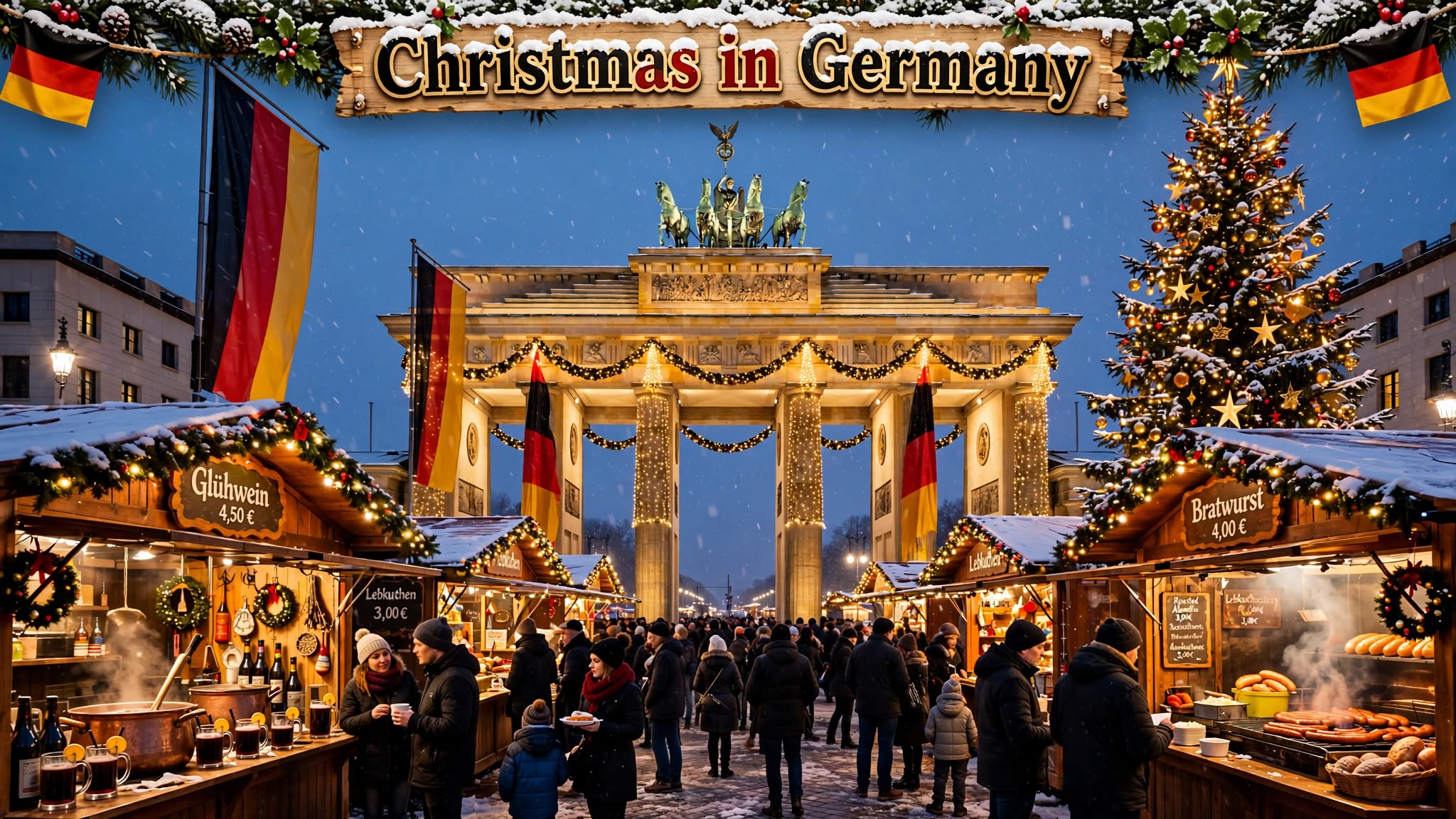
Germany has one of Europe’s richest Christmas traditions.
Advent wreaths, Advent calendars, Christmas markets, St Nicholas Day, gingerbread, stollen and Christmas Eve celebrations are all deeply associated with the German festive season.
The German National Tourist Board describes Advent as central to the season, with candles, baking, Christmas markets and traditions leading toward Heiligabend — Christmas Eve on December 24.
When is Christmas celebrated in Germany?
Christmas Day is December 25, but December 24 — Heiligabend — is extremely important.
Many families exchange presents on Christmas Eve.
Depending on family and region, gifts may be associated with the Christkind or Weihnachtsmann, the German Father Christmas/Santa figure.
Christmas Day and December 26 are then generally quieter holidays for family meals, visits and celebrations.
What is Santa called in Germany?
The most familiar German name resembling Santa Claus is:
Weihnachtsmann
Literally:
Christmas Man.
But German Christmas gift-bringing traditions are more complicated than simply replacing the English word “Santa.”
In many regions, especially in southern and western Germany, the Christkind is traditionally associated with bringing Christmas gifts.
So German children may grow up with Weihnachtsmann, Christkind — or family traditions involving elements of both.
🎅 Santa Says
Germany has created an administrative problem at North Pole headquarters.
Apparently sometimes I deliver the gifts.
Sometimes the Christkind does.
I have asked for a meeting to clarify departmental responsibilities.
No response yet.
Advent is a major part of German Christmas
Germany’s Christmas atmosphere begins well before December 24.
The four Sundays before Christmas form the Advent season.
Many homes have an Adventskranz — Advent wreath with four candles. Another candle is lit each Sunday as Christmas approaches.
Germany’s national tourism organization notes that the Advent wreath tradition is almost 200 years old. Earlier versions could contain many more candles; the familiar modern form generally has four.
Advent calendars
Germany is also closely associated with the Advent calendar.
From December 1 through December 24, a door, packet or compartment is opened each day.
Children’s calendars often contain chocolate or small toys, while elaborate modern versions are also made for adults.
Germany Travel describes Advent calendars as an established part of German festive preparations, with 24 surprises counting down toward Christmas Eve.
This is essentially a countdown calendar designed to answer the question every child asks in December:
“How much longer?”
German Christmas markets
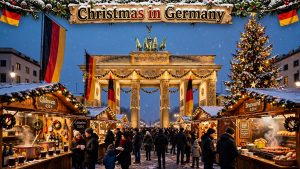
Few things are more strongly associated internationally with German Christmas than the Weihnachtsmarkt — Christmas market.
Historic squares fill with decorated wooden stalls selling food, drinks, ornaments, crafts and gifts.
Popular treats can include gingerbread, roasted nuts, sausages, stollen and hot drinks.
Germany Travel notes that Christmas markets begin opening from late November throughout the country.
One of the most famous is the Nuremberg Christkindlesmarkt, while Dresden’s Striezelmarkt dates to 1434, making it one of Germany’s oldest Christmas markets.
St Nicholas Day in Germany
Before Christmas comes another major date:
December 6 — Nikolaustag
On the evening of December 5, children traditionally clean their shoes or boots and leave them outside.
According to the custom, St Nicholas — Nikolaus visits during the night and places small gifts, nuts, sweets or fruit inside.
Germany Travel describes this tradition as widespread across Germany and connects Nikolaus with the historical Saint Nicholas, Bishop of Myra.
It is important to understand:
Nikolaus is not simply the same character as Weihnachtsmann.
This gives German children more than one mysterious bearded visitor to keep track of in December.
What do Germans eat at Christmas?
German Christmas food varies greatly by region and family.
But the festive season is famous for baking.
Stollen
Christstollen is a rich Christmas bread or cake often containing dried fruit and dusted heavily with powdered sugar.
Dresden is particularly famous for its Stollen tradition.
Lebkuchen
Lebkuchen is German gingerbread.
Nuremberg is especially famous for Nürnberger Lebkuchen.
Christmas cookies
German families bake many kinds of Plätzchen — Christmas cookies during Advent.
Popular varieties include cinnamon stars and vanilla crescent cookies.
The baking itself is often just as much a Christmas tradition as eating the results.
Christmas decorations from Germany
Germany has had enormous influence on Christmas decoration traditions far beyond its borders.
Christmas markets sell wooden ornaments, carved decorations, glass baubles and other handmade items.
Regions such as the Erzgebirge are particularly associated with traditional wooden Christmas craftsmanship.
Germany’s Christmas traditions also strongly influenced the spread of the decorated Christmas tree internationally.
Christmas Eve traditions
Christmas Eve traditions vary from household to household.
Some families attend church.
Some eat a relatively simple meal on Christmas Eve followed by a larger meal on Christmas Day.
Others make December 24 their main family dinner.
But the Bescherung — the giving and opening of presents — traditionally takes place on Christmas Eve in many German homes.
This is one of the most important differences between Germany and countries where children wait until Christmas morning.
How do you say Merry Christmas in German?
The most common greeting is:
Frohe Weihnachten!
Meaning:
Merry Christmas!
You may also hear festive wishes using words such as frohes Fest.
What makes Christmas in Germany special?
Germany’s Christmas experience is not built around only December 25.
It is an entire season.
Advent candles begin the countdown.
Advent calendars open day by day.
Nikolaus visits on December 6.
Christmas markets fill town squares.
Families bake cookies and gingerbread.
Then Christkind or Weihnachtsmann arrives as Christmas Eve finally comes.
That long build-up is one reason German Christmas traditions have become famous far beyond Germany itself.
Quick answer
What is Santa called in Germany?
Weihnachtsmann is the closest equivalent, although Christkind is the traditional gift-bringer in many areas.
When are presents opened?
Many German families exchange gifts on Christmas Eve, December 24.
What happens on December 6?
It is St Nicholas Day, when children may find sweets and small gifts in their shoes or boots.
What are famous German Christmas foods?
Stollen, Lebkuchen and many varieties of Christmas cookies.
What are German Christmas markets called?
Weihnachtsmärkte.
How do you say Merry Christmas in German?
Frohe Weihnachten!